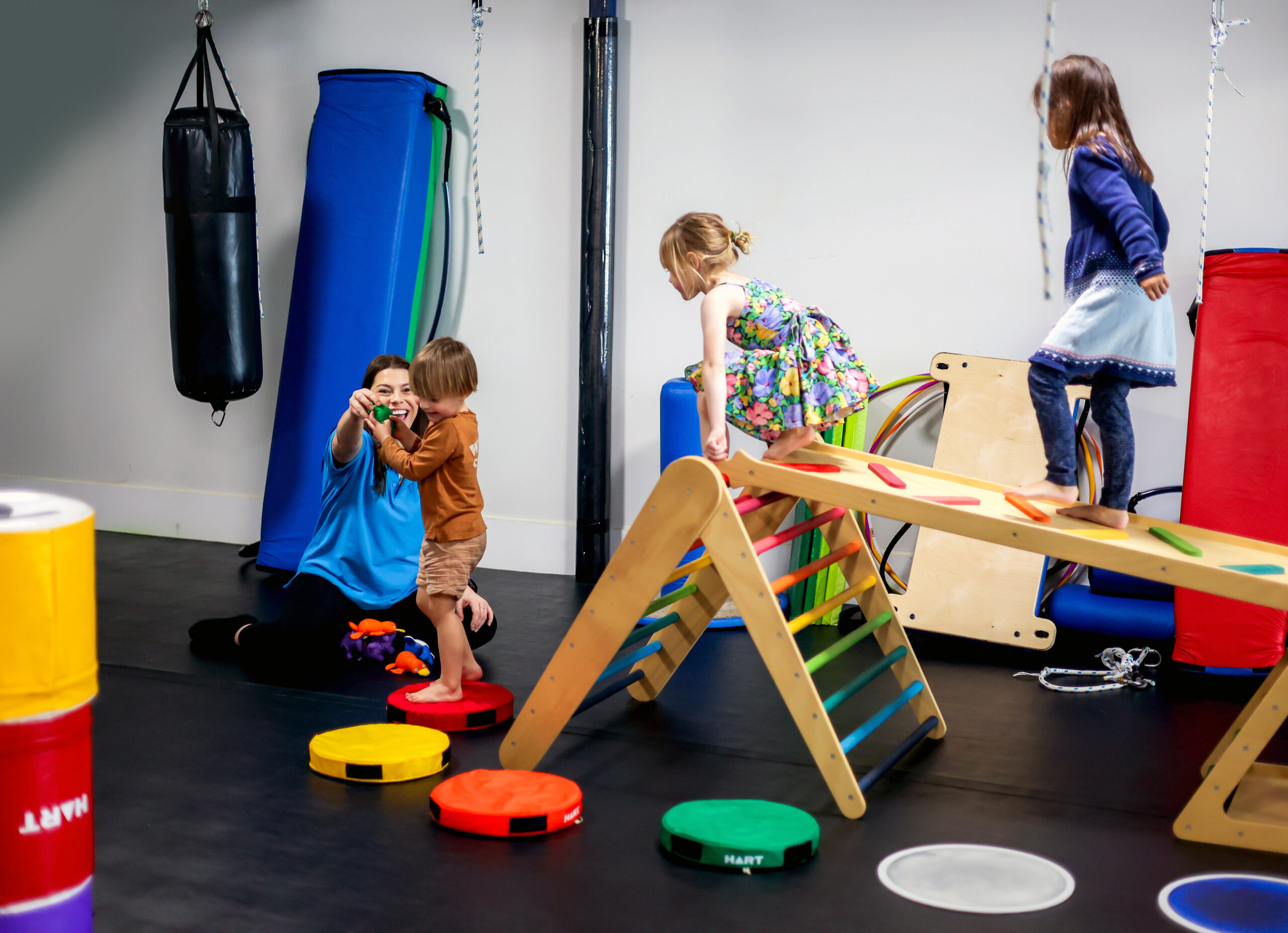
Many children are asked to sit still, focus, and start learning as soon as the day begins. But what if that is not how their brains are wired to work best? As paediatric occupational therapists, we know that for many children, especially those who are neurodivergent, movement is not a break from learning. It is a bridge to it.
When children move their bodies, they prepare their brains to engage, attend, and participate. Movement before learning is not just helpful; it is often essential.
Author: Sophie Robertson, Clinical Manager and Paediatric Occupational Therapist
5 min read
Movement Builds Regulation
Before a child can learn, they need to feel safe and settled in their body. Movement plays a key role in helping children regulate their nervous systems. Activities such as jumping, stretching, swinging, or crawling support:
- Sensory processing – helping the brain organise incoming information
- Body awareness – understanding where the body is in space
- Energy regulation – shifting from sluggishness or restlessness to a just-right state
Without this regulation, sitting down to learn can feel overwhelming or even impossible.
The Brain-Body Connection
Movement activates areas of the brain responsible for attention, memory, and emotional regulation. Research shows that physical activity can boost:
- Cognitive flexibility – the ability to switch between tasks or thoughts
- Working memory – holding and using information
- Focus and alertness – sustaining attention over time
This is especially important for children with ADHD, sensory processing differences, or other neurodivergent profiles. Their systems may need more movement, not less, to support attention and engagement.
What This Looks Like in Everyday Life
Consider a child named Maya. She is bright and curious but struggles to sit still at the start of her school day. Instead of pushing her to “try harder,” we look at what her body needs.
We might find that:
- A five-minute movement circuit helps her feel centred
- Swinging or bouncing reduces sensory defensiveness
- Animal walks before handwriting improve coordination and focus
Movement is not a reward Maya earns after she focuses. It is what helps her get there.
Movement Meets Developmental Needs
Young children are wired to move. Crawling, climbing, spinning, and jumping are not just play; they are developmental necessities. These activities build:
- Core strength and postural control – needed for sitting upright in a chair
- Fine motor readiness – the shoulder stability and coordination needed for handwriting
- Vestibular and proprioceptive integration – critical for balance, timing, and spatial awareness
Skipping over movement and expecting children to jump straight into desk work often sets them up for frustration.
Supporting Movement Before Learning
Here are a few practical ways parents, carers, and educators can support movement before learning, at home or in the classroom:
- Start the day with active play, such as jumping, climbing, or dancing
- Use movement-rich transitions, like hopping between tasks or using movement songs
- Offer movement breaks, short bursts of physical activity throughout the day
- Incorporate whole-body learning, such as using large arm movements to form letters or numbers
Most importantly, follow the child’s lead. Notice what types of movement help them feel organised and ready to engage.
A Neuroaffirming Reminder
Some children need more movement than others. That is not a problem to fix; it is information. It tells us how their nervous system is wired and what supports their success.
In a neuroaffirming approach, we do not try to change the child to fit the task. We adapt the task to meet the child’s needs. That often starts with movement.
Final Thoughts: Movement Is a Foundation
Movement is not separate from learning; it sets the stage for it. When we honour a child’s need to move, we support their ability to regulate, attend, and connect.
If your child struggles to focus or finds learning tasks hard, consider what is happening before the learning starts. Supporting their body’s readiness might be the missing piece.
Need support? Our therapy sessions always start with connection, and often with movement. If you would like to learn more about how we can support your child’s development, get in touch. We are here to help.
If you feel like your child is struggling focus or attention, talk to an occupational therapist for further guidance. Contact MoveAbout today. Check out our Facebook and Instagram pages for more education regarding sensory processing and regulation.